
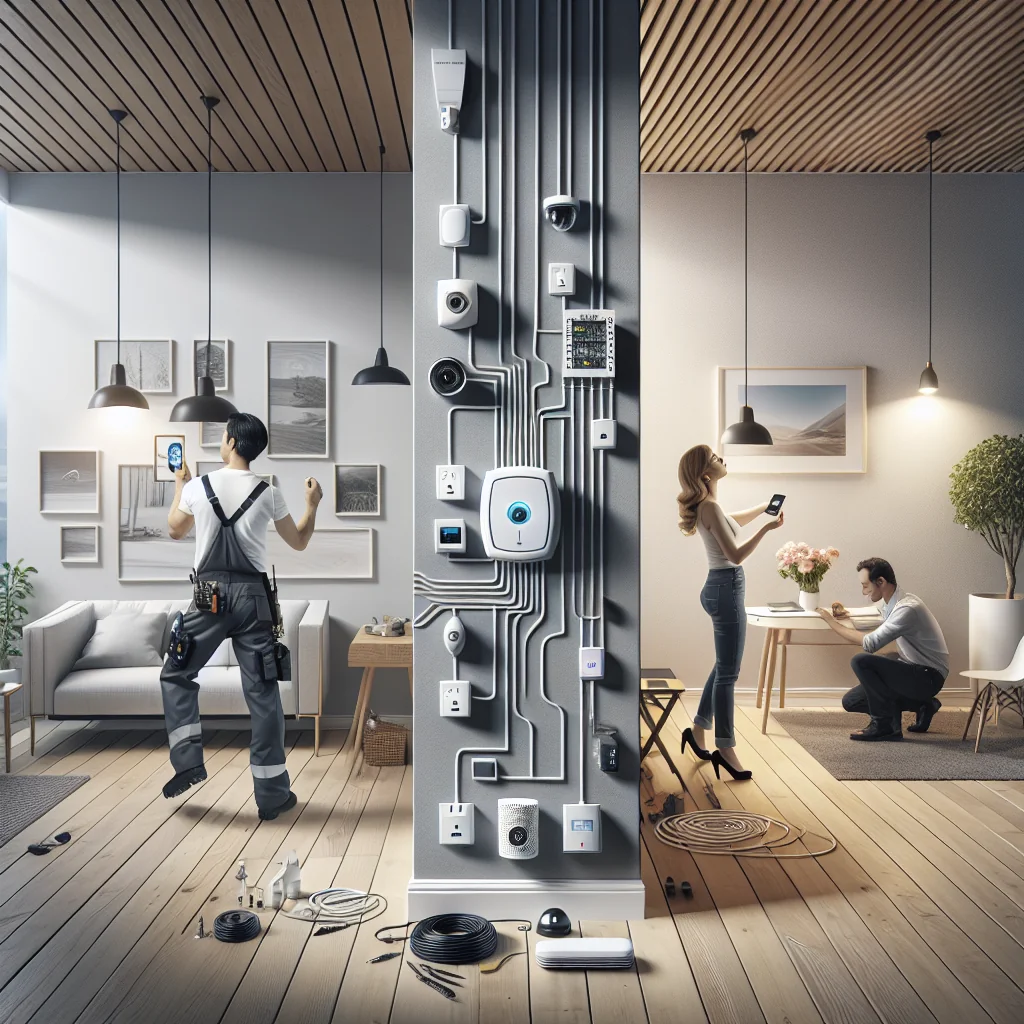
Wired vs Wireless Security System: How to Choose the Right Setup
Contents
Choosing between a wired vs wireless security system is one of the first big decisions for home or business protection. The choice affects cost, reliability, how hard the system is to install, and how easy it is to expand later. This guide explains the real differences in simple terms so you can match the system to your property and your habits.
How wired and wireless security systems actually work
Both wired and wireless security systems use similar parts: a control panel, sensors, cameras, and sirens. What changes is how those parts connect and send signals when something triggers an alarm. Understanding this basic flow makes the rest of the comparison much clearer.
A wired system links sensors and cameras to the control panel with physical cables. A wireless system uses radio signals, often over Wi‑Fi or a dedicated wireless protocol, to connect each device to the hub. In both cases, the panel then alerts you, a monitoring center, or both.
Wired security systems: strengths, limits, and ideal use cases
A wired security system uses low‑voltage cables to connect every sensor and camera to the main control panel. This design has been common in commercial buildings and long‑term homes for many years. The approach favors reliability and long life over quick setup.
Because wired devices draw power through the cable, they rarely need battery changes. Signals travel through copper rather than air, so wireless interference is not a concern. The trade‑off is that someone must run cables through walls, ceilings, or conduits during installation.
Wired systems suit people who plan to stay in the same property for a long time, want a “set and forget” setup, and do not mind more work upfront. They also fit new builds or major renovations where walls are already open and cabling is easy to add.
Wireless security systems: strengths, limits, and ideal use cases
A wireless security system connects sensors and cameras to a hub using radio signals. Many modern systems link to your phone through an app, send push alerts, and offer cloud recording for video. The main appeal is quick, clean installation with no need to open walls.
Most wireless sensors run on batteries, and many cameras use either batteries or a simple plug‑in power adapter. The system usually connects to your router by Wi‑Fi or Ethernet, and some hubs include a cellular backup module. The design favors flexibility and easy upgrades.
Wireless systems work best for renters, people who move often, or anyone who wants a DIY install. They also help in finished homes where running new cables would be messy or expensive. The trade‑off is that you must manage batteries and pay attention to Wi‑Fi quality.
Side‑by‑side: wired vs wireless security system comparison
The table below compares a wired vs wireless security system on the factors most buyers care about. Use it as a quick reference while you read the rest of the guide.
Wired vs wireless security system: key differences at a glance
| Factor | Wired security system | Wireless security system |
|---|---|---|
| Installation effort | High, usually professional; cables through walls | Low, often DIY; minimal drilling |
| Upfront cost | Higher labor, lower device cost | Lower labor, higher device cost |
| Reliability of signal | Very stable; no wireless interference | Depends on signal strength and network quality |
| Power source | Hard‑wired; few batteries to change | Mostly battery‑powered or plug‑in |
| Maintenance needs | Low; occasional checks and panel backup battery | Moderate; battery changes and firmware updates |
| Scalability | Harder to add devices far from wires | Easy to add more sensors and cameras |
| Best for property type | New builds, large homes, commercial sites | Rentals, small homes, apartments |
| Vulnerability to tampering | Cables can be cut if exposed | Signals can be jammed if poorly secured |
| Internet dependence | Often works without internet for local alarms | Usually needs internet for full features |
Many modern systems blend features from both columns, but the basic pattern holds: wired favors long‑term reliability and professional setup, wireless favors flexibility and speed.
Key pros and cons of wired vs wireless security system options
Before choosing a side, look at the main advantages and drawbacks in plain language. These points reflect everyday use, not marketing claims.
- Wired pros: Very stable connection, no wireless lag, low battery upkeep, good for large sites.
- Wired cons: Messy or costly to install in finished homes, harder to move, less flexible layout changes.
- Wireless pros: Fast install, easy to move or expand, ideal for renters and DIY users.
- Wireless cons: Needs good signal and power, batteries to manage, may rely heavily on the internet.
- Shared strengths: Both can support cameras, smart locks, and professional monitoring.
These pros and cons help you see that neither option is “better” for everyone. The right choice depends on your building, your budget, and how much effort you want to invest upfront.
Security and reliability: which system is safer in real life?
A common worry is that wireless systems are easy to hack or jam, while wired systems fail if someone cuts a cable. Both concerns are real in theory, but design choices reduce the risk in practice. The key is to look at how the system handles power loss, internet loss, and tampering.
Wired systems often keep working during internet outages because they use local alarms and phone lines or cellular modules for alerts. Wireless systems can keep running during power cuts if the hub has a backup battery and uses cellular backup. The weakest setup in either case is one that relies only on home Wi‑Fi and mains power.
For wireless security, choose devices that use encrypted signals and support two‑factor authentication on the app. For wired security, make sure critical cables are hidden or protected, and that the main panel is in a secure location, not in plain sight at the front door.
Cost and installation: what you actually pay for
Cost is not just the price of the kit on the box. You also pay through time, effort, and any professional labor. Wired and wireless systems spread these costs in different ways.
A wired system often uses cheaper individual sensors and cameras, but the labor to run cables and finish walls can be high. If you are building or renovating, that added labor is easier to absorb because other trades are already on site. For an existing finished home, the same work can be disruptive.
A wireless system shifts more cost into the devices themselves and ongoing cloud plans. You save on installation and can often set the system up in an afternoon. Over several years, subscription fees for cloud storage or monitoring can add up, so factor those into your long‑term budget.
Scenarios: which system fits your situation best?
Matching a wired vs wireless security system to real‑world situations can clarify the decision. Think about your property type, how long you will stay, and how tech‑comfortable you are.
For a new build or major renovation, a wired system often makes sense. You can run cables while walls are open, place cameras exactly where you want them, and enjoy a clean finish. The system will likely serve you for many years with little change.
For a rental, apartment, or first home, a wireless system is usually a better fit. You avoid drilling many holes, can take the system with you when you move, and can add or remove devices as your needs change. If you outgrow the system, you can sell or repurpose parts with less loss.
Hybrid and future‑proof options: you do not have to choose one side
Many modern setups blend wired and wireless parts. For example, you might use wired cameras for key entry points and wireless sensors for windows or sheds. A hybrid alarm panel can accept both wired zones and wireless devices.
This hybrid approach lets you keep reliable coverage where it matters most and enjoy wireless flexibility elsewhere. It also helps if you already have some wired infrastructure and want to add smart features without ripping everything out.
When you plan for the future, choose a system that supports open standards or has a strong track record of updates. That way you can add new devices, integrate with smart home platforms, or switch monitoring providers without replacing every sensor.
How to decide between wired vs wireless security system for your property
To reach a clear decision, focus on a few key questions rather than every small detail. Your answers will point you strongly toward wired, wireless, or a mix.
Ask yourself how long you plan to stay, how comfortable you are with DIY work, and how stable your internet and power are. Consider whether you want professional monitoring, app control, or both. Think about any future plans, such as adding smart locks, lights, or garage controls.
In short: choose wired if you value long‑term stability and have access to the walls. Choose wireless if you value flexibility, speed, and easy changes. A hybrid system can give you the best of both, especially in complex homes or small businesses.